Getting there, dress and what to expect
El Querandí evening: getting there, dress
How to reach Perú 322 and get home, what to wear, how the night runs, what you see and hear on stage, and who should skip it, checked against official pages.
Check availability ↗Quick answer
Dress smart casual, plan transport both ways, and expect a seated evening of live tango music and dance. El Querandí is at the corner of Perú and Moreno in Monserrat, in the historic centre of Buenos Aires. The show runs about seventy-five minutes and the whole evening with dinner about three hours. The booking calendar and your confirmation show the times, and whether your option includes hotel pickup.
How the evening is built
The evening has up to three parts. The doors open first, then dinner if you booked a dinner option, then the show. The venue's own site says the show runs every day, with one performance each evening. The show lasts about seventy-five minutes, and the booking page puts the whole evening, dinner included, at about three hours. Show-only guests have a shorter night. The exact times for your date are on the booking calendar and your confirmation, so plan the rest of your day around those. If your option includes a hotel pickup, the pickup details appear in your confirmation, so wait for them before you book anything else that evening.
Getting to Perú 322
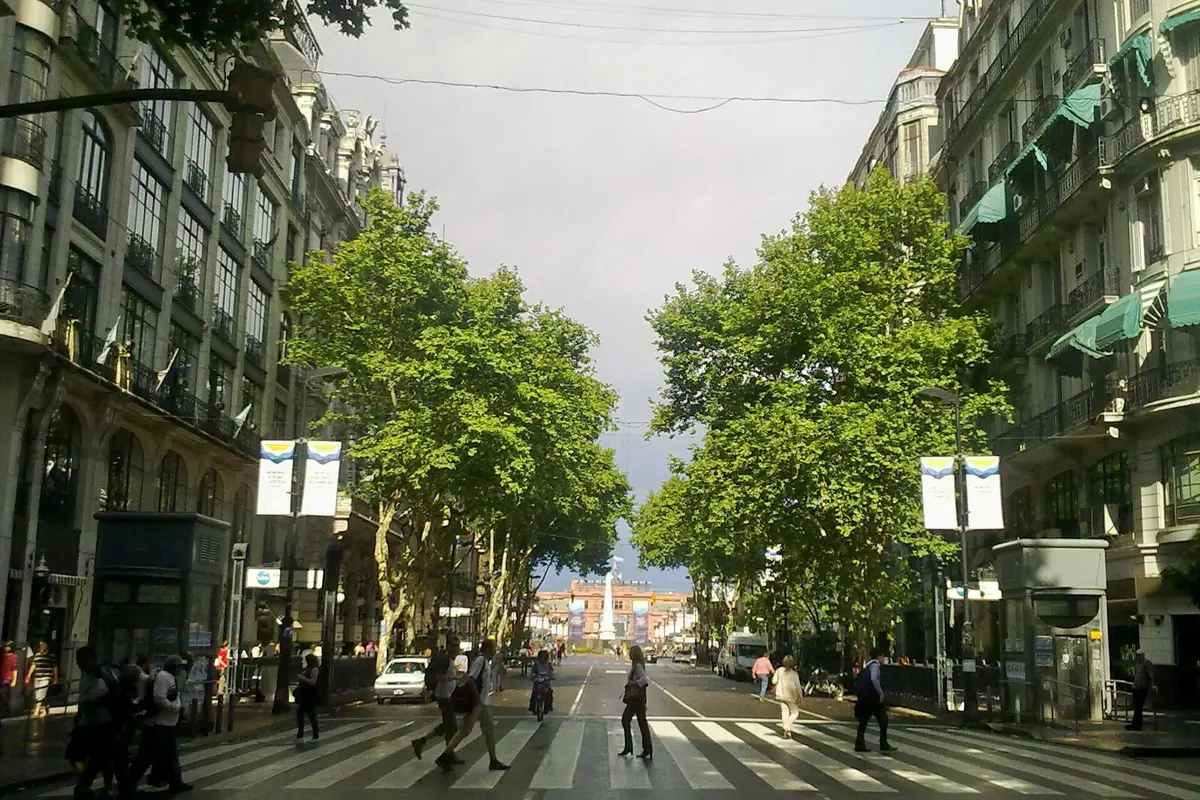
El Querandí is at Perú 322, on the corner of Perú and Moreno, in Monserrat, the historic centre known as the Casco Histórico. The barrio also holds Plaza de Mayo and Avenida de Mayo. A licensed taxi is the simplest way: black and yellow, metered, and free when the libre sign is lit. The city's tourism site says drivers expect a cross street, so say Perú y Moreno. The city's taxi app, BA Taxi, books regular taxis. For the subte or a bus you need a rechargeable SUBE card.
Getting back after the show
Decide your return before you sit down. If your option includes a hotel transfer, your driver brings you back; the booking page says the meeting point varies by option, so check yours. Otherwise, the city's tourism site says licensed taxis are plentiful in busy areas, run on meters, and charge fares in Argentine pesos only, so have some pesos or a plan. Pre-booked private cars called remises are another option. Buses run all day and night, but the subte does not, so check its last trains for your night. Whichever you choose, settle it before you sit down, not after the final number.
What to wear
The booking page lists the dress code as smart casual, so leave sportswear and beachwear at the hotel. You will be seated indoors, at a table, for a few hours, so wear something comfortable that still looks tidy. Add a layer for the trip there and back. Buenos Aires has a humid subtropical climate, with June to August as winter. Mean daily highs average about 30 degrees Celsius in January and about 15 in July, with July nights averaging 7 to 8 degrees, so winter evenings call for a proper coat. In summer, a light layer is enough for the walk from a taxi, but the dining room is a seated room, so dress for sitting in one place rather than for the street.
When to go
The show runs every day, so any evening of your trip can work. Seasons are reversed from the northern hemisphere: summer is December to February and is the wettest season. Winter is cooler and drier by comparison. If your trip falls in August, the city also hosts its International Tango Festival and World Cup, with free shows, classes and milongas. Special dates can follow a different programme from an ordinary evening, so read the option text on your date before you book. If you are choosing between two nights, the show is the same on each, so pick by your own plans, by the weather, and by which night your preferred option has availability.
What you see
The show is called Nuestro Tango, and the venue describes it as a tour through the stages of tango. It starts with Origins, music from the tenements on the city's fringes. Immigrants and the Arrabal follows, when the bandoneón became a fixture of the sound. Gardel and the tango song comes next, then Salons and Milongas, when great orchestras filled the ballrooms. The last part, Modernism, is led by Astor Piazzolla, who turned tango toward concert music. Dancers carry each period, so you follow the history through movement and music, and the mood changes as the decades move on.
What you hear
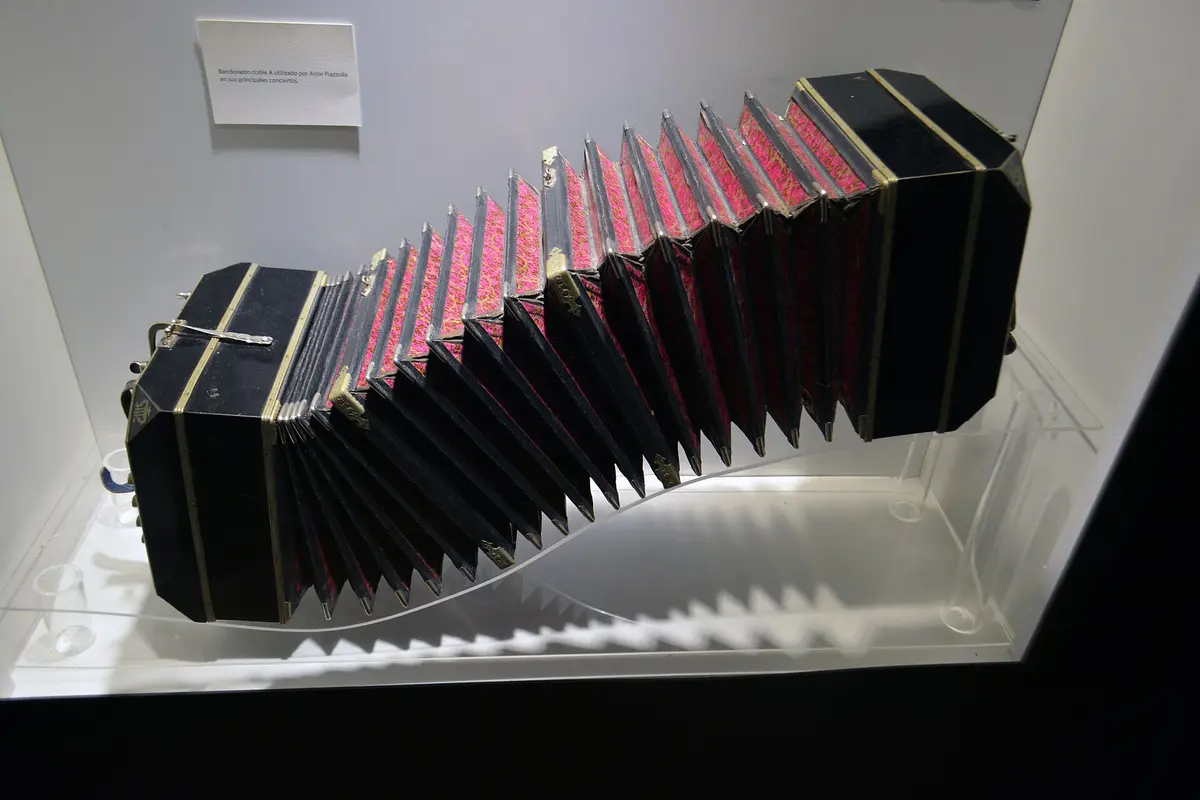
The music is live. The quartet plays piano, double bass, bandoneón and violin, and the venue's own site also mentions singers. The bandoneón is the voice to listen for. It is a concertina-type instrument, named after the German dealer Heinrich Band, and is thought to have reached Argentina around 1870 with emigrants and sailors. The player pushes and pulls air through bellows, and each button gives a different note on the push and the pull. That breathing sound is what many people mean by the sound of tango. Composers and players such as Eduardo Arolas and Vicente Greco brought it into tango, and Piazzolla was himself a virtuoso of the instrument.
Tango in two minutes
Tango took shape in the second half of the 19th century along the Río de la Plata, in the poor port districts of Buenos Aires and Montevideo. UNESCO describes it as a blend of European immigrants, descendants of African slaves and native criollos, and added it to its Intangible Cultural Heritage list in 2009. Carlos Gardel's recording of Mi noche triste, in 1917, is credited with creating the tango song. Astor Piazzolla, who lived from 1921 to 1992, blended tango with jazz and classical music, and some traditional fans objected at first.
The room and its building
The building dates from 1860 and once housed a model school, according to the city government. A bar was installed there in 1920, and the wall panelling of darkened cedar, the spiral columns, the chequered floors and the long wood-and-tin counter survive from it. The bar closed in the 1980s, and the city's tourism site says it was reborn twelve years later with its original furniture, restored in 1992. The city has named it a Bar Notable and a Testimonio Vivo de la Memoria Ciudadana, a title for living witnesses of the city's memory.
Read next: Getting to El Querandí: Monserrat, Transfers, Timing
Children, access and diets
The venue's own site lists a half-rate child price for ages 3 to 12, and free entry up to age 2, on its direct bookings. Check which age categories your option sells on the calendar. The booking page marks the activity as wheelchair-accessible, so ask the venue about the route to your table before you book. For diets, the venue lists vegetarian, gluten-free and vegan dishes, and the booking page mentions a vegetarian menu. Its contact page lists WhatsApp and email for questions.
Who this isn't for
If you want to learn or dance tango yourself, a class or a milonga gives you that, and the city's tourism site says many milongas hold a class first. If you would rather watch in a casual, neighbourhood setting, free concerts and milongas suit you better. If you cannot plan transport at night, check whether your option includes a hotel pickup before you pay. And if you need the evening to run to the minute, wait for your confirmation before booking anything else that night.
Frequently asked questions
What is the dress code at El Querandí?
Smart casual, as the booking page lists. Leave sportswear and beachwear at the hotel, and bring a coat in winter, which runs June to August in Buenos Aires.
Where is El Querandí and how do I get there?
At Perú 322, on the corner of Perú and Moreno, in Monserrat. A licensed taxi is simplest: give the cross street, Perú y Moreno. Check whether your option includes hotel pickup.
How long is the show?
About seventy-five minutes, with the whole evening, dinner included, at about three hours. The booking calendar and your confirmation show the times for your date.
Is the show suitable for children?
The venue's own site lists a half-rate child price for ages 3 to 12 and free entry up to age 2. Check the age categories your option sells.
Is El Querandí wheelchair-accessible?
The booking page marks the activity as wheelchair-accessible. Ask the venue about the route to your table before you book.
What instruments are played live?
A quartet of piano, double bass, bandoneón and violin plays live. The venue's own site also mentions singers and dancers.
Sources
- Gallery and the show "Nuestro Tango" (El Querandí official site)
- El Querandí (Buenos Aires city tourism site, Spanish)
- Bar El Querandí (Buenos Aires city government)
- Getting around (Buenos Aires city tourism site)
- A passion for tango (Buenos Aires city tourism site)
- Tango (UNESCO Intangible Cultural Heritage)
- Bandoneón (Wikipedia)
- Climate of Buenos Aires (Wikipedia)